The Condition

What Is Lung GVHD?

Bone marrow transplantation is a life-saving therapy for patients with blood cancers. But its success is often threatened by Graft-versus-Host Disease (GVHD) — a systemic condition in which donor immune cells attack the recipient's own tissues.

GVHD affects up to 50% of allogeneic bone marrow transplant recipients. It can involve multiple organs: the mouth, eyes, gastrointestinal tract, skin, and lungs. The most severe manifestation is lung GVHD, known as Bronchiolitis Obliterans Syndrome (BOS).

BOS is characterized by progressive narrowing of the small airways, leading to worsening shortness of breath, recurrent respiratory infections, and ultimately respiratory failure. Its estimated 5-year survival rate is approximately 40%. Patients who beat blood cancer but develop BOS will die from this complication of their cure — unless a lung transplant can be obtained.
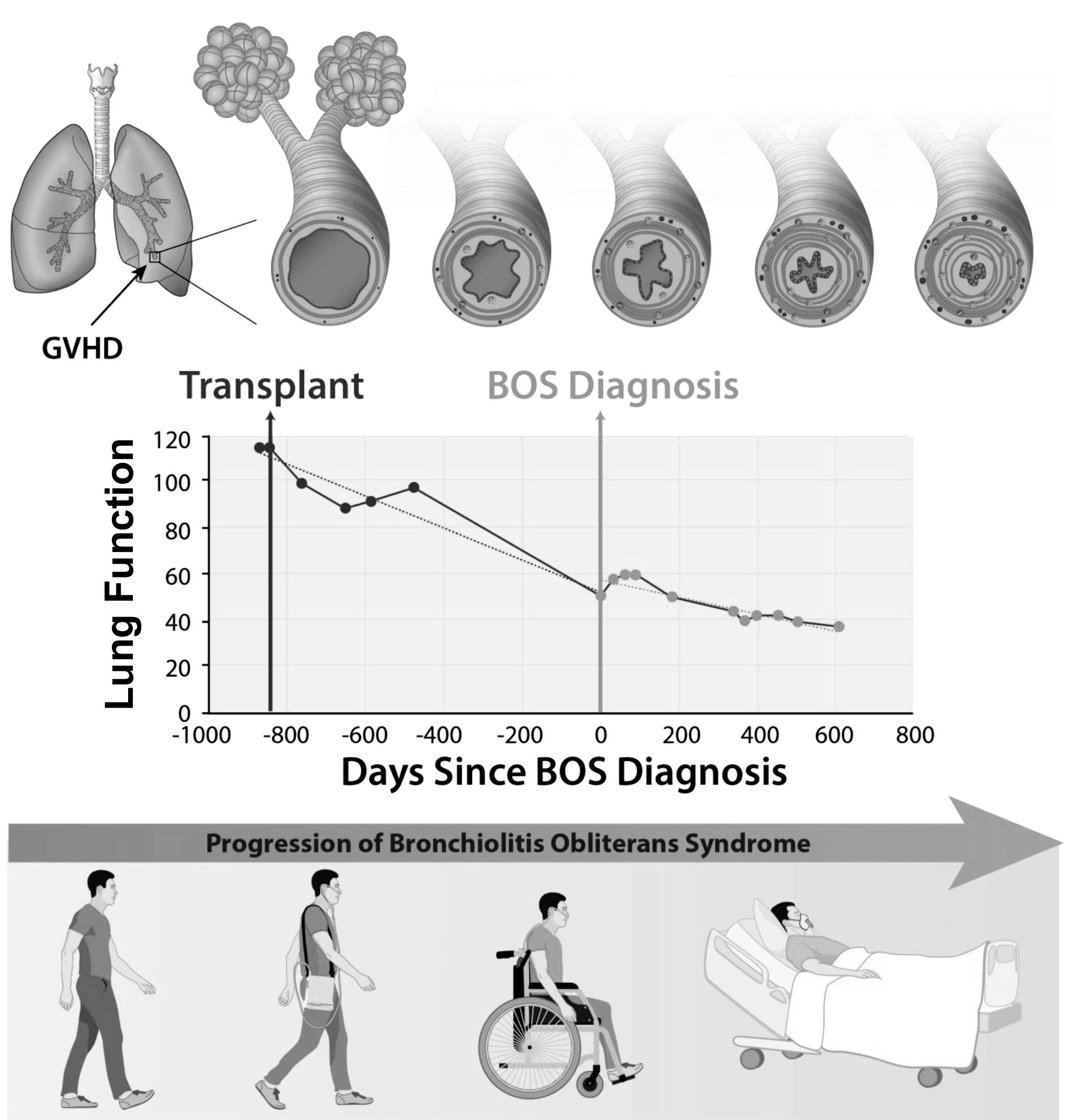
pic of lungs

Bronchiolitis Obliterans Syndrome

Why Research Is Difficult

The Challenges of Studying a Rare Disease

Low Incidence

Affecting approximately 10–15% of bone marrow transplant recipients, BOS is rare enough that large-scale clinical trials are difficult to assemble — limiting the evidence base for new treatments.

Insidious Onset

BOS often develops slowly and may initially be mistaken for general post-transplant recovery. By the time it is identified, irreversible fibrosis has often already occurred in the small airways.

Severe Underfunding

Despite its morbidity and mortality, BOS research is severely underfunded relative to the burden it imposes on patients and families. Holly's Vow exists to change that reality.

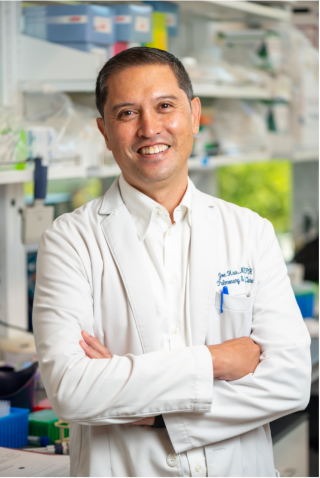
pic of Joe Hsu
Founder and Director of the Stanford Lung GVHD Clinic
Stanford University School of Medicine
Leading researcher in post-transplant lung fibrosis
Co-chair, BOS Pathobiology — Geneva 2026

Scientific Leadership

Joe Hsu, MD, MPH

Dr. Hsu is a thought leader in lung fibrosis that occurs after bone marrow and lung transplantation. In 2016, he founded the Stanford Lung GVHD Clinic — an internationally recognized outpatient program solely devoted to the treatment of pulmonary complications after bone marrow transplant.

He and his research group were the first to recognize that BOS could be treated with medications targeting the fibrosis of the small airways — demonstrating improved lung function in 40% of trial patients. This novel anti-fibrotic strategy has opened an entirely new avenue for therapeutic development.

Dr. Hsu's group has also advanced the earlier diagnosis of BOS using machine learning analysis of radiology data. Earlier detection is paramount: it allows for disease stabilization and meaningfully improves survival.

In fall 2026, Dr. Hsu will co-chair the BOS Pathobiology section of an international Lung GVHD conference in Geneva, Switzerland — gathering the world's experts in transplant immunology, airway disease, and infectious disease to advance the field.